Fog types & formation
Fog is cloud on the ground. It forms when air reaches its dew point, cooled to it or moistened to it, so the vapour condenses into droplets. Each type is a different way of getting there.
| Type | How it saturates | Key conditions |
|---|---|---|
| Radiation | ground radiates heat away at night, cooling the air to its dew point | clear, light wind, humid; low ground; burns off by day |
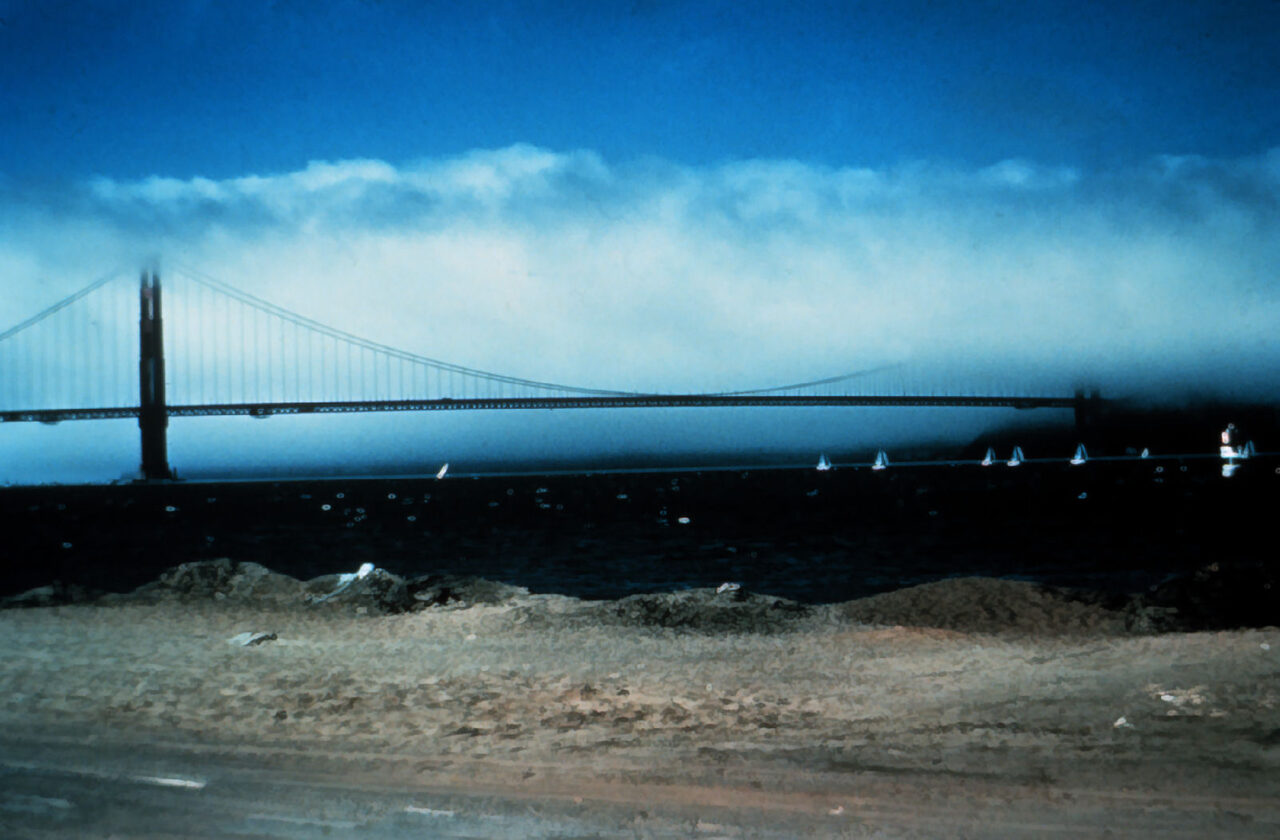
| Advection | warm moist air moves over a colder surface | breeze over cold water or snow; can persist |
| Upslope | moist stable air forced up terrain cools adiabatically | steady up-slope wind |
| Steam (sea smoke) | cold air over warm water: it evaporates then recondenses | cold air, warm or open water |
| Precipitation (frontal) | warm rain falls into cold air and evaporates to saturation | steady rain ahead of a warm front |
- Radiation fog needs a light wind (FAA AWH). A dead calm leaves the fog shallow, a light wind (up to about 5 kt) deepens it by spreading the cooling through a deeper layer, and a strong wind stirs the damp air up into low stratus instead.
- Advection and steam fog are opposites. Advection is warm air over a cold surface (it cools the air); steam is cold air over warm water (it adds moisture).
Intuition: there are only two ways to reach the dew point: cool the air to it (radiation, advection, upslope) or add moisture (steam, precipitation). Work out which and you have named the fog.
Source note: the fog-formation types here are grounded in the FAA Aviation Weather Handbook (FAA-H-8083-28), a free public-domain text; the physics is universal and matches the Canadian material (equivalent to TP 9352).
Trap: mixing up radiation and advection fog. Radiation fog forms on a still, clear night over land and burns off by day; advection fog blows in on a wind over a cold surface and can sit there all day.
References
- FAA Aviation Weather Handbook (FAA-H-8083-28)